

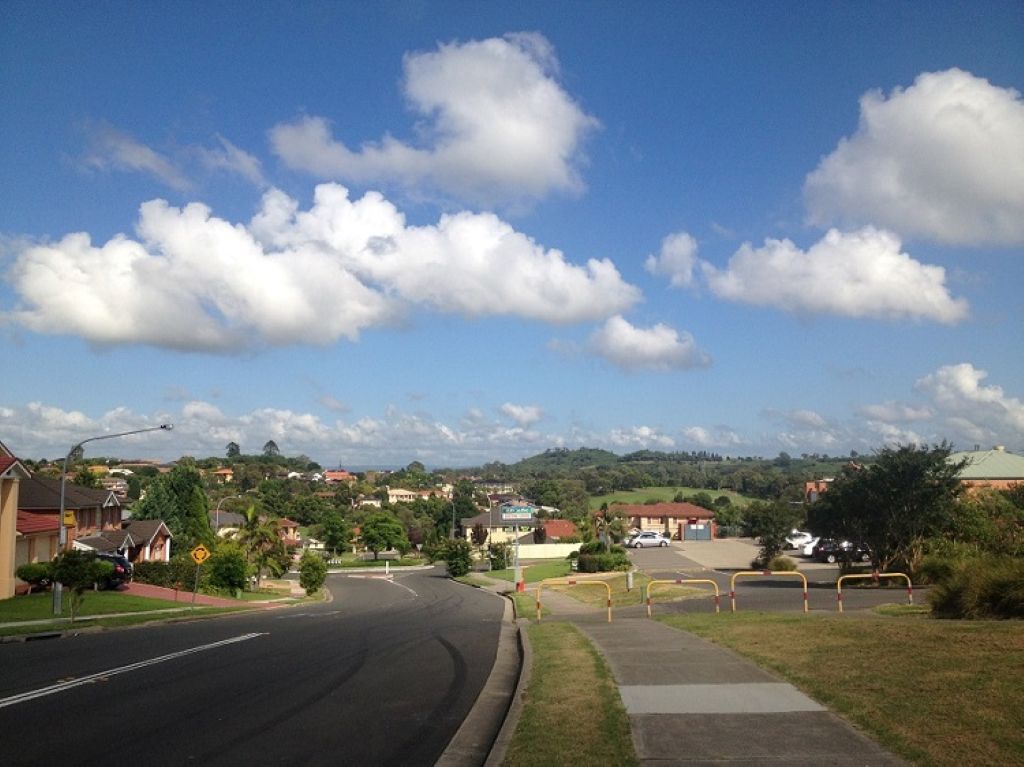
In May, Sustainable Australia Party councillor Cameron McEwan called for a report on urban heat and its impact across Campbelltown.
Greens councillor Jayden Rovera seconded the motion and a majority of councillors voted in support.
The report has now landed, and it contains both good news and bad news for Campbelltown residents.
We already knew Campbelltown is hot during summer, but the report makes it clear that some suburbs are hotter than others.
It says that during the summer of 2018–2019, 110 sensors were strategically placed every two kilometres across Campbelltown.
The sensors collected air temperature readings every 10 minutes, providing detailed day and night-time temperature graphs, maps of temperature distribution, streaming video clips depicting daily evolution of temperature variation and impact of heat wave events.
The findings revealed the 2018/19 summer broke local records and experienced three heatwaves.
During one heatwave event, maximum daily air temperatures remained above 38°C for eight consecutive days.
January 2019 was the hottest month with an average daytime air temperature of 29.9°C and an average nighttime air temperature of 21.7°C.
But the report points out that not all suburbs in Campbelltown feel the heat equally, with daytime air temperature varying by around 6°C across the LGA.
During days of extreme heat, air temperatures varied by more than 10°C across the LGA
An example provided by the report is during a cool change experienced on a day of extreme heat, a temperature variation of more than 17°C was recorded between Kooringa Reserve in St Andrews (measuring 43.3°C) and Hodgson Close in Wedderburn (measuring 26°C).
The report found that there is “significant’’ underreporting of temperature by official weather stations.
“Our closest Bureau of Meteorology weather station at the Australian Botanic Gardens, Mt Annan only recorded 23 days over 35°C compared to the [110] sensors, which recorded 54 days over 35°C,’’ the report said.
“The weather station only recorded one day over 40°C, compared to the sensors, which recorded 22 days over 40°C.’’
The report also noted what next steps will look like as the community builds its resilience levels in dealing with urban heat.
- Review and update local heatwave plans to ensure that they reflect current risks, community vulnerabilities, and best practices in heatwave management.
- Continue to implement community engagement and education through targeted communication strategies that raise awareness about heat risks, protective actions, and available support services, particularly for vulnerable populations such as the elderly, people with disabilities, and those without access to cooling.
- Continue to support our emergency services by facilitating regular inter-agency meetings and scenario planning exercises to ensure seamless coordination during heat events.
- Update the Emergency Help Hub to include a heatwave specific tab.
- Review areas identified as cool refuges and work with community partners to establish and promote accessible cooling centres.
- Finalise the sustainability and resilience design standards for council-led projects that provide guidance on heat mitigation requirements.
Just plant more trees and gardens :)
CAMPBELLTOWN is lucky that most of the homes built since 1960 were built on lots that were at least 600 sqm a and council had a strict policy of tree preservation so there was plenty of of trees to cool the areas, but since 2000 the size of building lots has been reduced to 270-300 sqm leaving no room to plant trees and allowing developers to bulldoze every tree so they can build the maximum number of homes.
In some of these new estates in the Camden area it has resulted in summer temperatures being in excess of 50 degrees and this will happen in CAMPBELLTOWN.