

In the second of our history series, Campbelltown Local Studies Librarian Andrew Allen puts the spotlight on James Meehan on the bicentenary of his passing.
April 21, 2026 marked the 200th anniversary of the death of a great Australian who had connections to our local Macarthur area.
Surveyor, explorer, farmer and bushman, James Meehan made a significant contribution to the colony in the early 19th century.
Despite this, Meehan has never had the recognition due to him.
Arriving as an Irish convict, Meehan would help shape the foundations of modern Australia with his meticulous surveys and town plans.
Meehan’s first connection to the local area was in 1805 when he surveyed the track used by John Warby between Prospect and the Cowpastures.
He also marked out 5000 acres for John Macarthur at Camden Park.
Meehan himself was granted 340 acres of land in the district of Minto in 1809. He was to have called it Thomas Town after his only son, but the grant was withdrawn after a review by Governor Lachlan Macquarie.
In 1810, however, Macquarie did grant Meehan 1140 acres to be known by the name “Macquarie Field’’.
In 1820, James Meehan was asked by Macquarie if he would let his Macquarie Field house to be used as an academy – to be conducted by Rev Thomas Reddall – for the upper class youth of the colony.
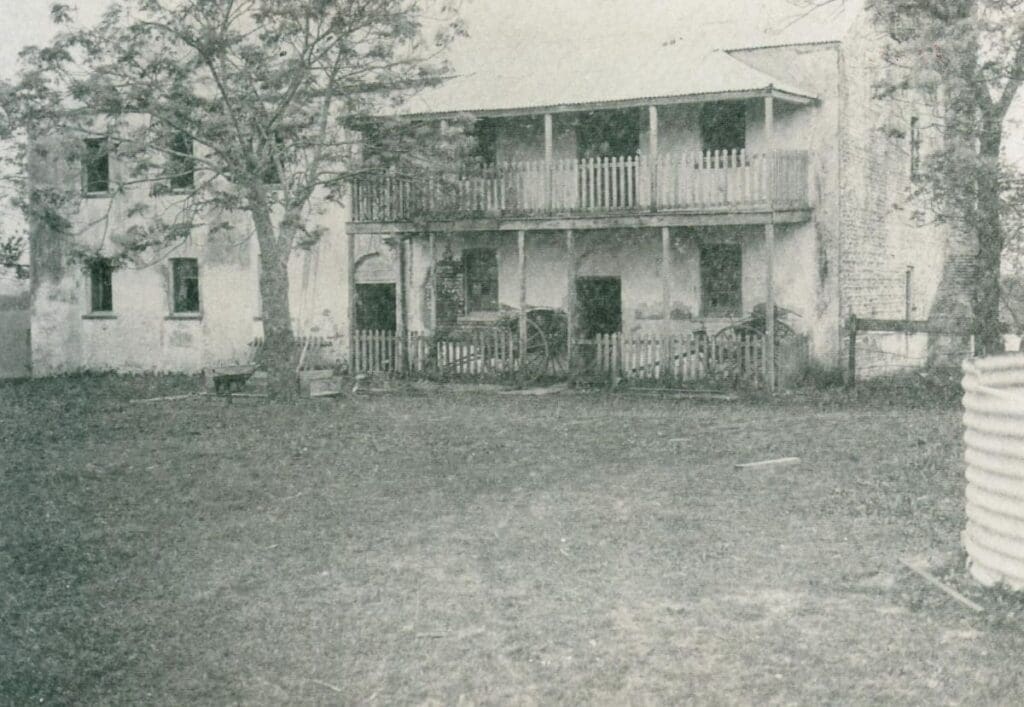
Meehan agreed so long as he could keep two rooms for himself. This house became known as Meehan’s Castle, with its two storeys and 16 rooms (pictured above).
James Meehan made a significant contribution to the lives of those less fortunate than himself, particularly convicts.
He treated them with respect and in return received their loyalty.
However, it was his work as a surveyor that won him the most praise.
Macquarie wrote of Meehan in 1817: “There is not a more useful officer serving under this Government, being particularly well qualified for the office of Deputy Surveyor General from his perfect knowledge in that particular line, his local and extensive knowledge of every part of this Territory and his intimate acquaintance with the history and cause of every grant or lease ever made in the colony since its first establishment.”
James Meehan High School is named after him, as is a street within Macquarie Links housing estate.
Meehan was just 52 when he passed away at “Macquarie Field’’.
Author Peter Bradley’s excellent The Convict and the Compass: the untold story of James Meehan was published last year, and copies can be borrowed from Campbelltown Library, HJ Daley. This is a must read for those interested in our colonial past and those who shaped our future.



I think the School eventualy became the King’s School under the next Rector Rev. Robert Forrest when he applied for a Royal Warent from William IV.
Trevor Richardson.
Very interesting to see an article on James Meehan on the bicentenary of his death on April 21st. As with your writer, I strongly recommend Peter Bradley’s most interesting work on his ancestor, which is very detailed regarding the life of James Meehan, a man long forgotten by many historians in favour of others who put themselves forward, unlike Meehan who stayed in the background as the supreme surveyor, working like a dog everyday of his life from his arrival from Ireland in 1800, in harsh, often extreme, conditions for the benefit of the colony. A quiet man, he wasn’t one to seek accolades, just respect for doing a job well done. Meehan was in the same league as Flinders and Macquarie, men who came to this distant land, the equivalent of going to the moon today, and worked tirelessly to make a go of this British outpost with a look to the future of the colony and what they hoped it would become. They would be proud of their input to that future and the standing of Australia in the world today. We owe them gratitude as we look to the history of them and other pioneers around Macarthur and the early areas of what was then a colony, starting with NSW and Tasmania. Not many know that James Meehan was instrumental in the setting up of Hobart back in 1803-4, the laying out of towns and roads across Tasmania and so much of NSW. He was invaluable, as were many of the colonists, who lived and worked in Macarthur. Residents in the area should be very proud of the history of Macarthur and the men and women who made it an important part of the colony back in the day. James Meehan was but one of them.
Did you’s know that he has living descendants or no one cares or no one dares to care, well I do…..
Do you live in Campbelltown, Mr Meehan?