
An innovative program aimed at reducing the number of people on surgery waiting lists has been introduced at Campbelltown Hospital.
High Volume Short Stay surgeries are planned procedures where patients are admitted for up to 72 hours, with a focus on improving recovery times and patient outcomes.
These surgeries generally include ear, nose and throat surgery, general surgery, gynaecology, urology, ophthalmology and orthopaedics, and account for more than 80 percent of all surgery undertaken in NSW public hospitals.
The short stay surgery model focuses on coordinated care before, during, and after surgery, helping patients to recover sooner and return home safely.
South Western Sydney Local Health District has established a dedicated, District-wide day-only surgery model to increase access to high-volume, low-complexity procedures at Campbelltown Hospital.
The service delivers cataract surgery and transperineal prostate biopsies.
When fully operational, the service is expected to deliver up to 2,500 cataract procedures and 350 transperineal biopsies annually, with the objective of reducing the number of overdue patients in both cohorts and improving equitable access to surgery across the District.
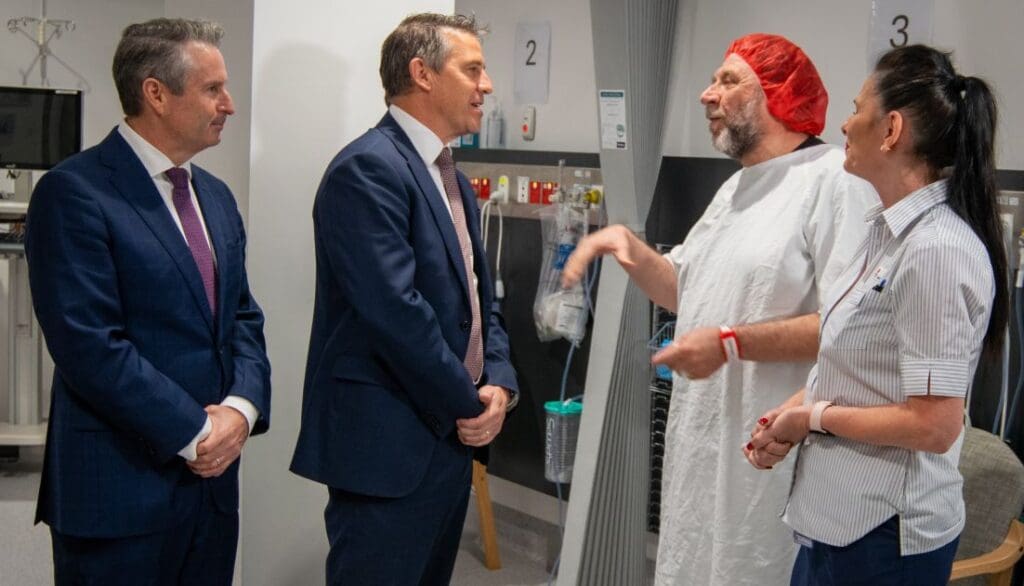
Local MP Greg Warren and NSW health minister Ryan Park visited Campbeltown Hospital last week to talk to medical staff involved in High Volume Short Stay program.
As part of the initial $30 million roll out, High Volume Short Stay surgery programs have been set up in local health districts and networks across the state, including Campbelltown Hospital, one of the first to be included.
The $30 million investment is expected to deliver an estimated 2,300 surgeries by July 1, 2027.
The number of overdue surgeries peaked at more than 18,000 under the previous state government, says the Minns Labor Government.
Since being elected, it says it has reduced the number of people waiting longer than clinically recommended from 14,059 in March 2023 to 3,955 in March 2026.